When to use a calculator instead of manual conversion is a common question for students, professionals, and everyday users. While understanding how conversions work is important, there are many situations where using a calculator is the smarter, safer, and more efficient option.
In today’s fast-paced world, calculators are not shortcuts for avoiding learning. They are tools that help reduce errors, save time, and ensure accuracy—especially when conversions matter in real-world decisions.
What Is Manual Conversion?
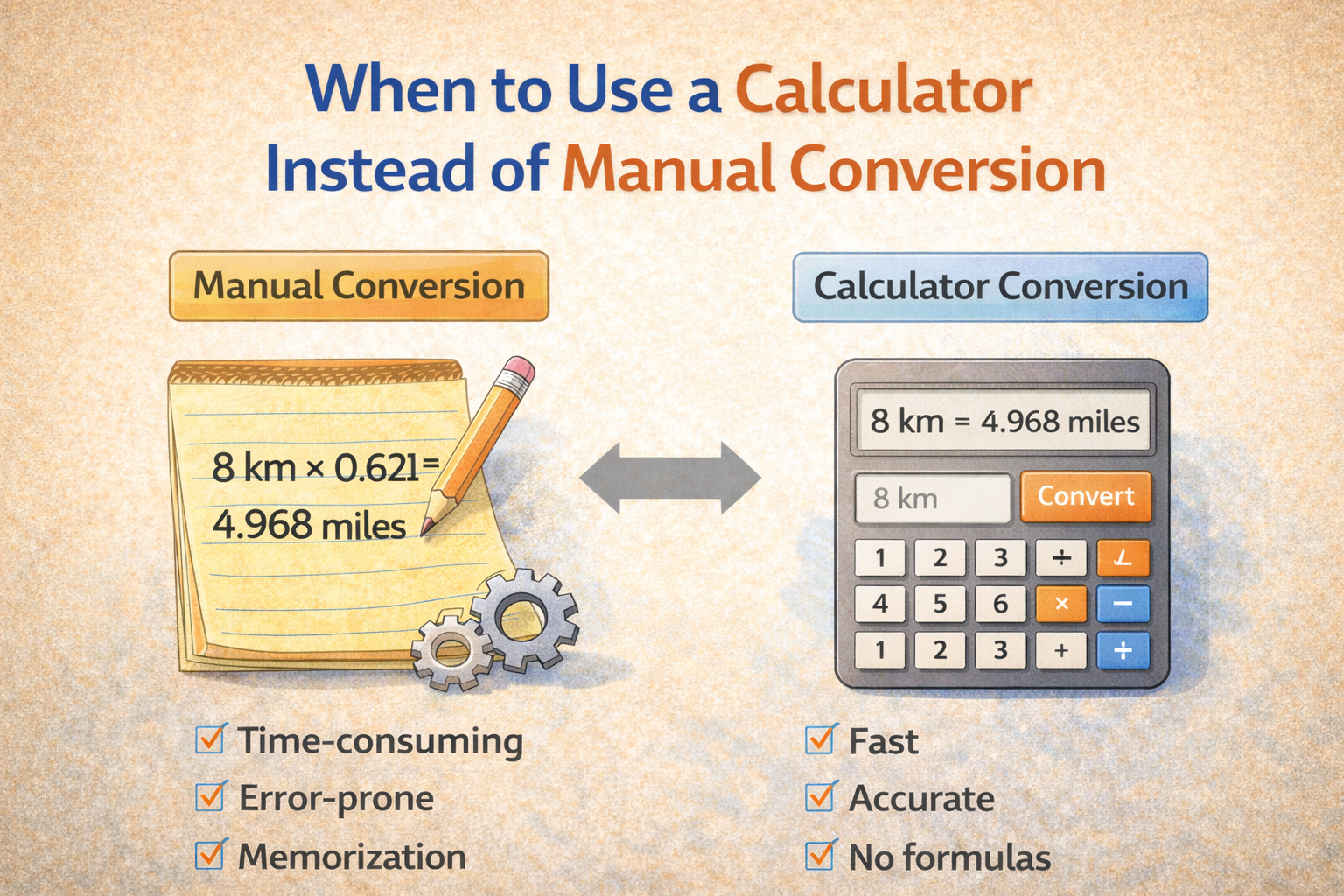
Manual conversion is the process of converting units using formulas, conversion factors, or mental math.
Examples include:
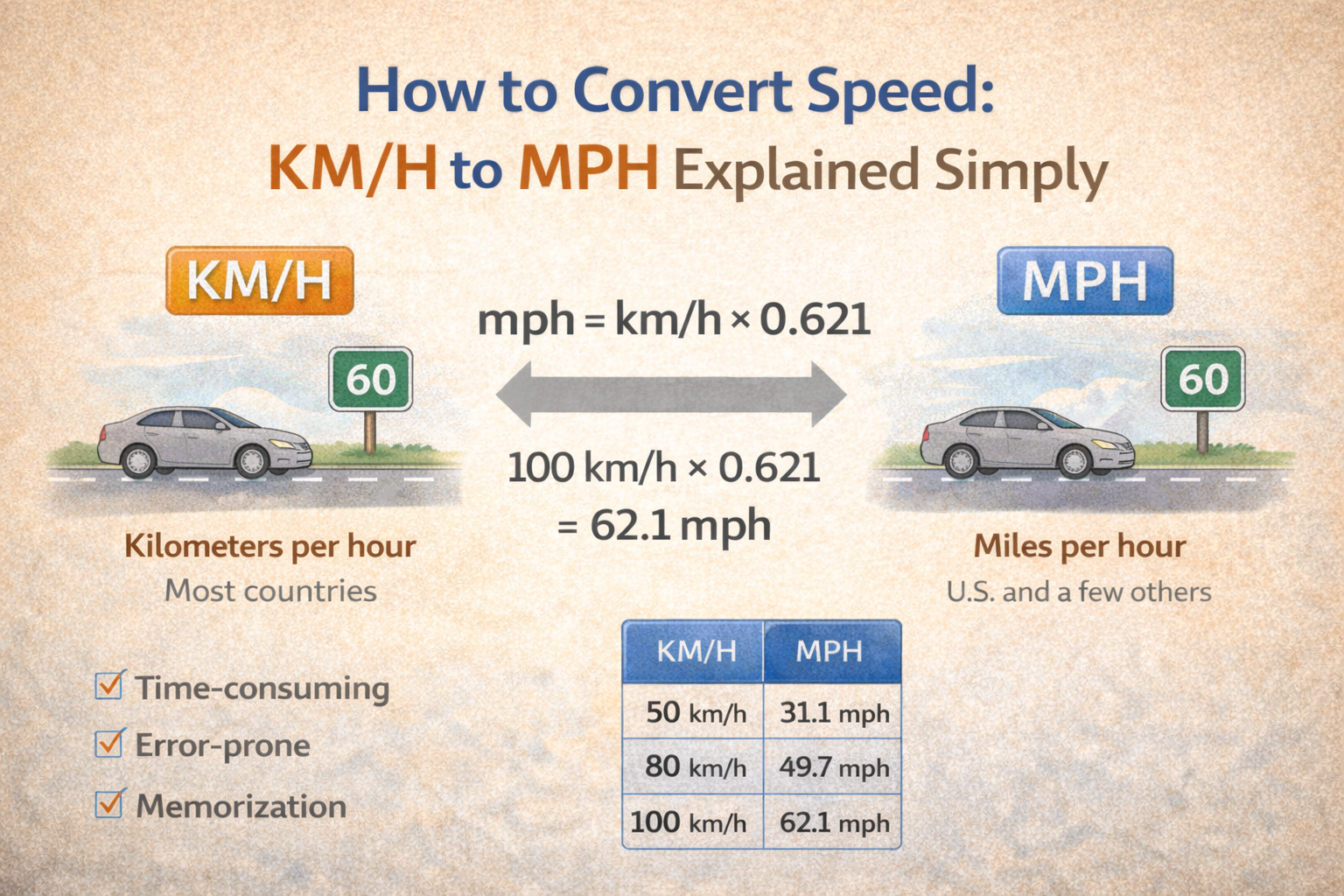
- Multiplying kilometers by 0.621 to get miles
- Dividing pounds by 2.204 to get kilograms
- Converting Celsius to Fahrenheit using a formula
Manual conversion is useful for learning and basic estimation, but it has limits.
What Is Calculator-Based Conversion?
Calculator-based conversion uses:
- Online unit converters
- Digital calculators
- Conversion apps or tools
These tools automatically apply the correct conversion factor and produce instant, accurate results.

Why Manual Conversion Isn’t Always the Best Choice
Manual conversion can work well for simple problems, but it becomes less effective when:
- Numbers are large or complex
- High accuracy is required
- Time is limited
- Multiple conversions are needed
Small math errors can easily lead to incorrect results.
When Accuracy Is Critical, Use a Calculator
One of the clearest answers to when to use a calculator instead of manual conversion is when accuracy matters.
Situations where accuracy is critical include:
- Engineering calculations
- Scientific measurements
- Medical dosages
- Construction and design
- Financial calculations
In these cases, even a small mistake can have serious consequences.
When Working With Complex or Large Numbers
Manual conversion becomes difficult when dealing with:
- Decimals with many digits
- Very large distances or weights
- Scientific values
For example:
- Converting 12,847 kilometers to miles
- Converting pressure or energy units
- Converting multiple values at once
Calculators handle these instantly and accurately.
When You Need Speed and Efficiency
Manual conversion takes time, especially if you:
- Need to remember formulas
- Double-check your math
- Convert multiple values
Using a calculator:
- Saves time
- Reduces mental effort
- Improves productivity
This is especially important for professionals and students under time pressure.
When You’re Converting Units Frequently
If you convert units often, calculators are the better choice.
Common examples:
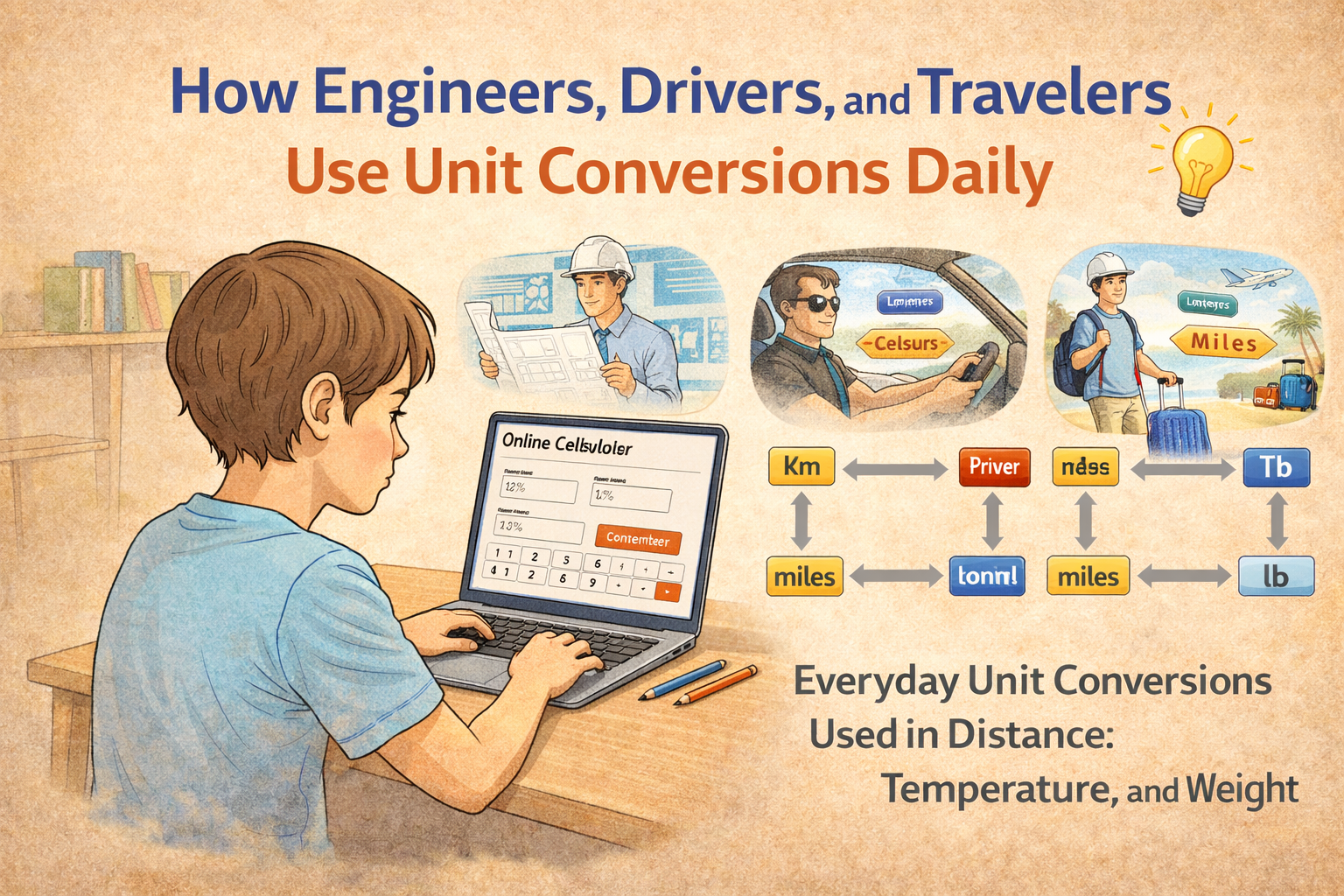
- Drivers converting speed or distance
- Travelers converting temperature and luggage weight
- Students checking homework
- Engineers reviewing specifications
Repeated manual conversion increases the chance of error.
When Using International Measurements
Different countries use different measurement systems. Manual conversion becomes risky when switching between:
- Metric and imperial units
- Celsius and Fahrenheit
- Kilograms and pounds
In international contexts, calculators help ensure you’re using the correct conversion every time.
When Learning New or Unfamiliar Units
Manual conversion is harder when:
- You don’t know the conversion factor
- You’re learning a new subject
- Units are unfamiliar
Calculators help users:
- Learn correct values
- Avoid memorization errors
- Focus on understanding instead of guessing
When Studying or Checking Homework
Students often ask whether using calculators is allowed during learning. The best approach is balance.
Use calculators when:
- Checking final answers
- Verifying steps
- Identifying mistakes
Avoid calculators when:
- Learning basic arithmetic
- Practicing mental math
Manual Conversion vs Calculator Conversion (Comparison)
| Manual Conversion | Calculator Conversion |
|---|---|
| Requires memorization | No formulas needed |
| Slower | Instant results |
| Error-prone | Highly accurate |
| Good for learning basics | Best for real-world use |
Both methods have value, but calculators are often the safer option.
When Professionals Should Always Use Calculators
Professionals should rely on calculators when:
- Safety is involved
- Money or resources are at risk
- Decisions affect others
Engineers, drivers, travelers, scientists, and technicians all rely on calculators to avoid costly mistakes.
When Manual Conversion Is Still Useful
Manual conversion still has value when:
- Learning fundamentals
- Estimating rough values
- Practicing math skills
- Explaining concepts
Understanding how conversions work makes calculator results more meaningful.
Choosing the Right Calculator for Conversions
A good conversion calculator should:
- Be simple and easy to use
- Support multiple unit types
- Work on mobile devices
- Provide accurate results
Educational calculator sites are ideal for both learning and daily use.
Common Mistakes to Avoid When Using Calculators
Even with calculators, users should avoid:
- Entering incorrect units
- Misreading results
- Rounding too early
- Relying on unreliable tools
Always double-check inputs.
Frequently Asked Questions
Is using a calculator considered cheating?
No, not when used for learning, checking, or real-world tasks.
Should students always use calculators?
No. Manual practice is important at early stages.
Are online calculators accurate?
Yes, when they use correct conversion factors.
Conclusion
Understanding when to use a calculator instead of manual conversion helps people make smarter and safer decisions. While manual conversion is useful for learning and estimation, calculators are essential when accuracy, speed, and reliability matter.
In real-world situations—such as engineering, travel, driving, and education—calculators reduce errors and save time. The best approach is not choosing one method over the other, but knowing when each is appropriate.