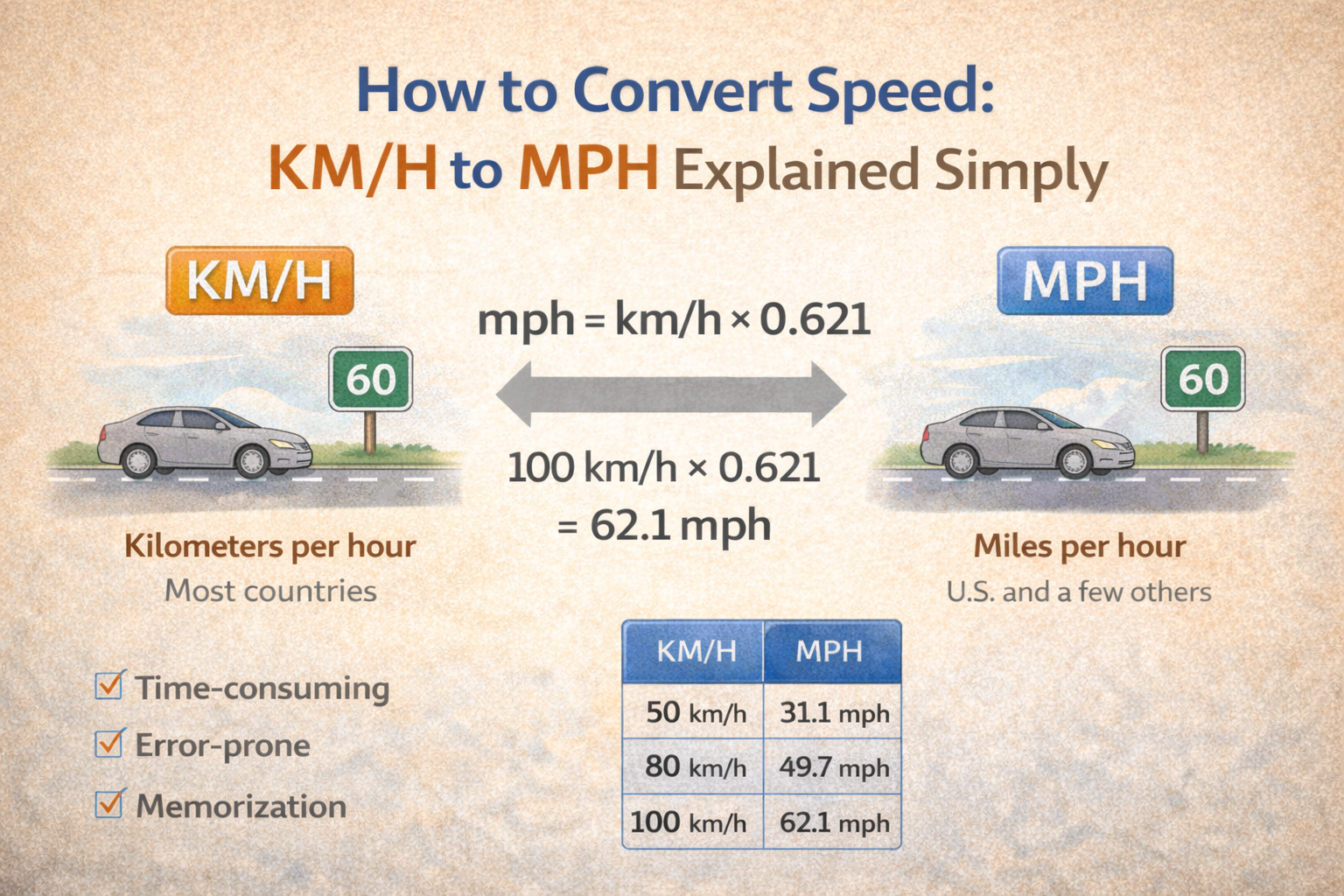
How to Convert Speed: KM/H to MPH Explained Simply is a common question for drivers, travelers, and anyone reading speed limits or vehicle data across different countries. Since some regions use kilometers per hour (km/h) and others use miles per hour (mph), knowing how to convert between the two helps you drive safely and understand speed correctly.
This guide explains the conversion step by step, using simple language and real-life examples.
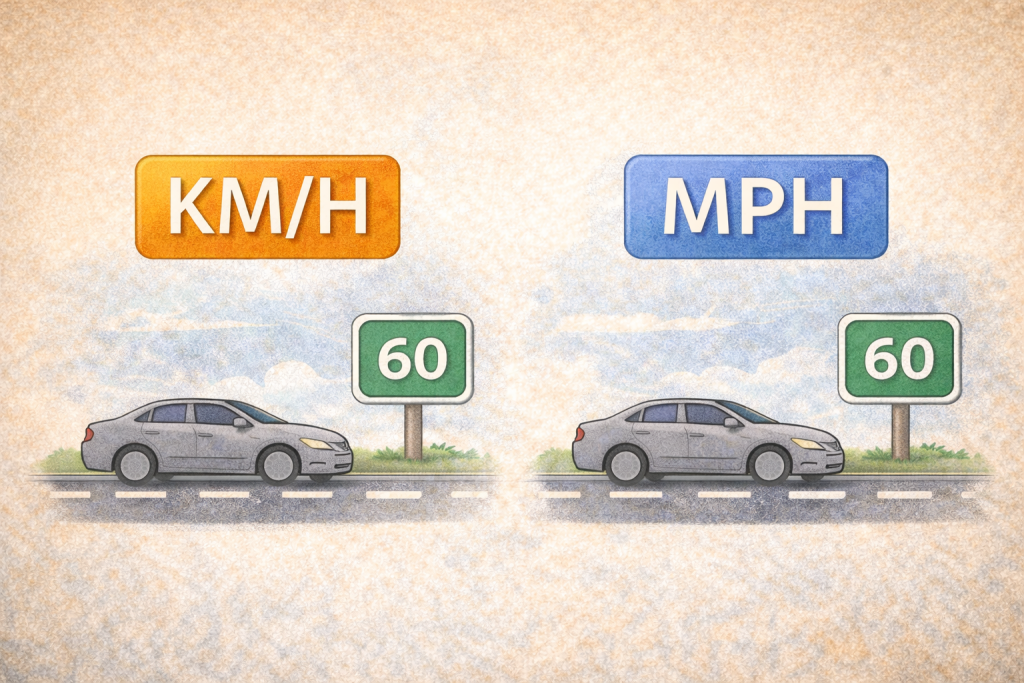
What Is KM/H and MPH?
Before converting speed, it’s important to understand what these units mean.
- Kilometers per hour (km/h):
Measures how many kilometers are traveled in one hour. It’s used in most countries worldwide. - Miles per hour (mph):
Measures how many miles are traveled in one hour. It’s mainly used in the United States and a few other regions.
Both measure speed — they just use different distance units.
Why Speed Conversion Matters
Speed conversion matters because misunderstanding speed can lead to:
- Speeding fines
- Unsafe driving
- Incorrect travel planning
This is especially important when:
- Driving in another country
- Renting a car abroad
- Reading vehicle dashboards or GPS systems
Knowing how to convert km/h to mph helps you stay safe and confident on the road.
The Simple Formula to Convert KM/H to MPH
The conversion is based on the relationship between kilometers and miles.
Conversion factor:
1 kilometer = 0.621371 miles
Formula:
mph = km/h × 0.621
This formula works for all speed values.
Step-by-Step Example: KM/H to MPH
Let’s convert 100 km/h to mph.
- Start with the speed: 100 km/h
- Multiply by 0.621
- 100 × 0.621 = 62.1 mph
So, 100 km/h equals 62.1 mph.
Quick Mental Math Shortcut
For quick estimates (not exact values), use this trick:
- Divide km/h by 1.6
Example:
- 80 km/h ÷ 1.6 ≈ 50 mph
This method is helpful when driving and you need a fast estimate.
Common KM/H to MPH Conversions
Here are some commonly searched conversions:
| KM/H | MPH |
|---|---|
| 30 km/h | 18.6 mph |
| 50 km/h | 31.1 mph |
| 80 km/h | 49.7 mph |
| 100 km/h | 62.1 mph |
| 120 km/h | 74.6 mph |
Real-Life Driving Examples
Speed Limits
- City speed limit: 50 km/h → about 31 mph
- Highway speed limit: 120 km/h → about 75 mph
Navigation and GPS
GPS systems often switch units automatically, but understanding the numbers helps you interpret them correctly.
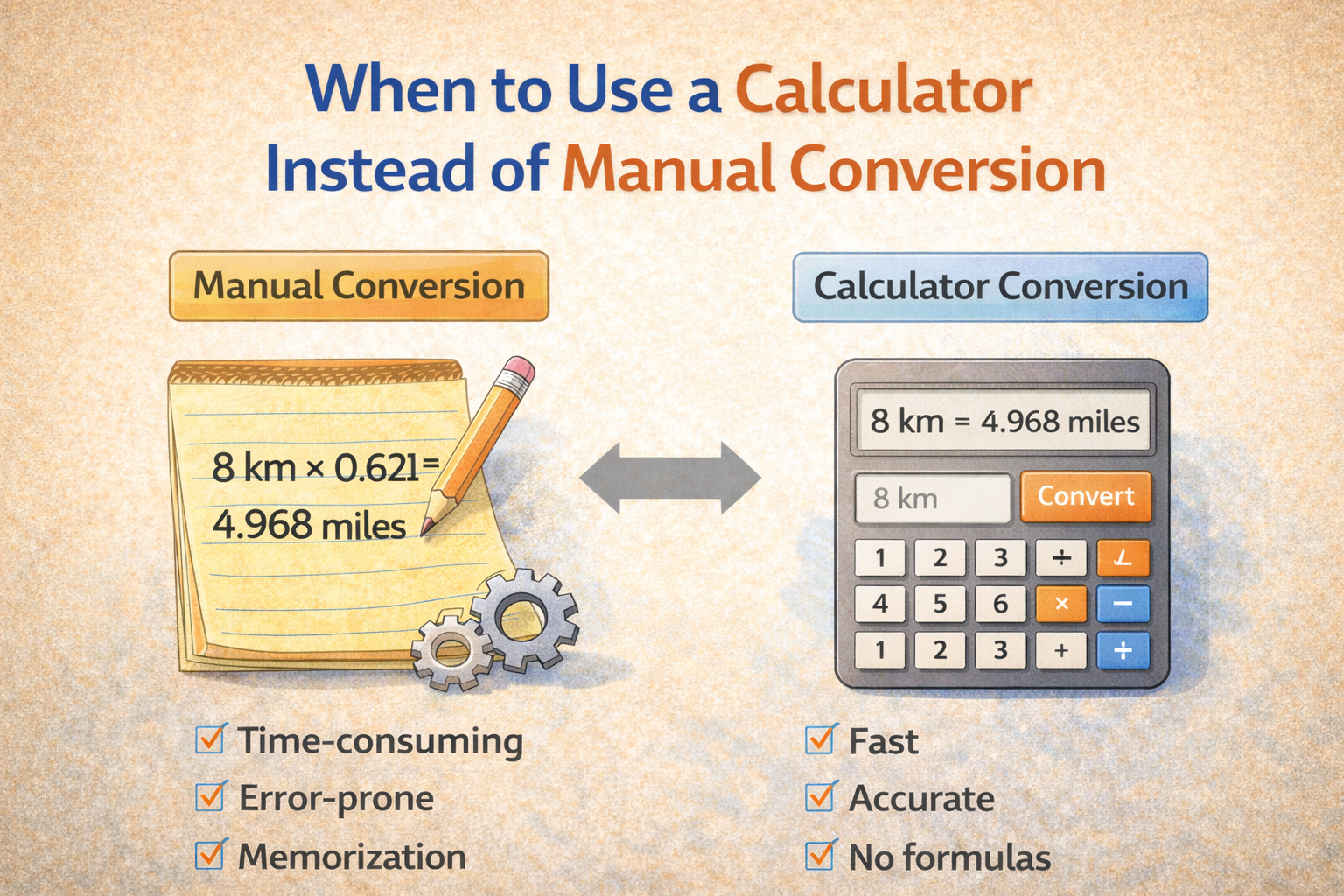
When You Should Use a Calculator
Manual conversion is useful for learning, but using a calculator is better when:
- Accuracy matters
- Speeds include decimals
- You’re converting many values
- You’re under time pressure
Online speed calculators give instant and reliable results.
KM/H to MPH vs MPH to KM/H
It’s important not to mix directions:
- KM/H → MPH: multiply by 0.621
- MPH → KM/H: multiply by 1.609
Using the wrong factor gives incorrect results.
Common Mistakes to Avoid
Avoid these mistakes when converting speed:
- Using the wrong conversion factor
- Forgetting which unit you’re converting from
- Rounding too early
- Guessing without checking
A calculator helps avoid these errors.
Frequently Asked Questions
Is km/h faster than mph?
The units are different, but the speed itself is the same once converted.
Why do some countries use km/h and others use mph?
It depends on the measurement system adopted by each country.
Is the conversion exact?
Yes, when you use the correct conversion factor.
Conclusion
Understanding How to Convert Speed: KM/H to MPH Explained Simply helps you drive safely, travel confidently, and interpret speed limits correctly across different regions. Whether you use the formula, a mental shortcut, or an online calculator, knowing how speed conversion works prevents mistakes and improves road safety.
For quick and accurate results, especially in real-world situations, a reliable online speed calculator is the easiest solution.