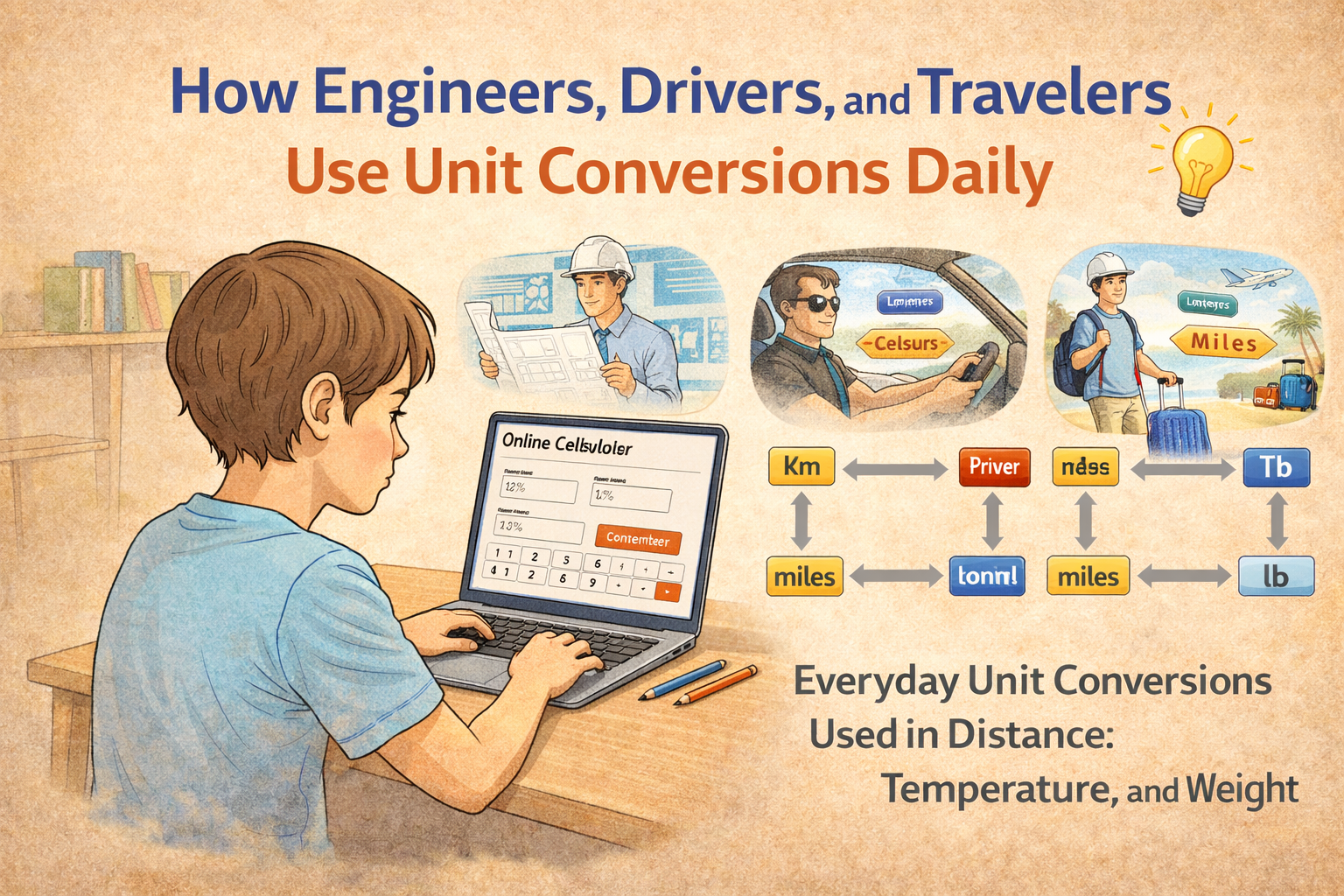
How engineers, drivers, and travelers use unit conversions daily is something most people experience without even realizing it. Every time a bridge is designed, a car crosses a border, or a traveler checks the weather abroad, unit conversions are quietly at work behind the scenes. These conversions make it possible for people across different countries, industries, and systems to understand the same measurements accurately.
In a world where multiple measurement systems still exist, unit conversions are not optional. They are essential tools that help prevent errors, improve safety, and support smooth communication across professions. This guide explains what unit conversions are, why they matter, and how engineers, drivers, and travelers rely on them every single day.
What Are Unit Conversions? (Beginner Explanation)
Unit conversion is the process of changing a measurement from one unit to another without changing the actual quantity being measured. The value stays the same in the real world; only the way it is expressed changes.
For example:
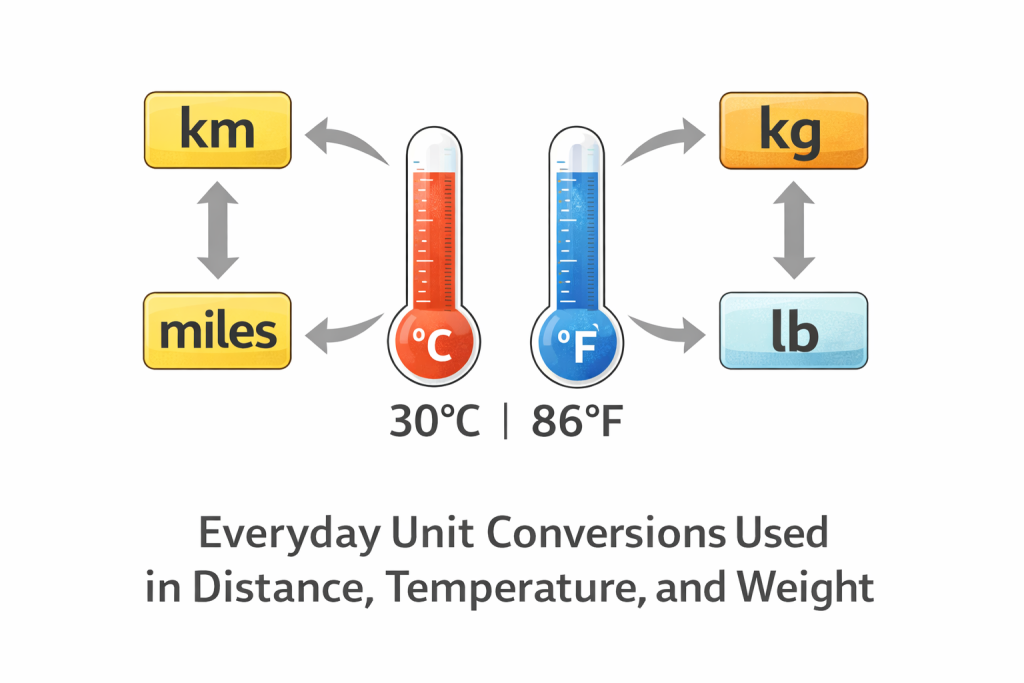
- 1 kilometer equals 0.621 miles
- 100 degrees Celsius equals 212 degrees Fahrenheit
- 1 kilogram equals 2.204 pounds
Unit conversions allow people using different systems to understand the same information clearly and consistently.
Why Unit Conversions Matter in Everyday Life
Unit conversions are used constantly in daily life, even outside technical professions.
They help people:
- Understand distances and speeds
- Compare temperatures
- Measure weights and loads
- Follow instructions accurately
- Avoid misunderstandings
Without unit conversions, global travel, international trade, engineering projects, and transportation systems would be far more complicated and risky.
Why Different Professions Depend on Unit Conversions
Not everyone uses unit conversions at the same level. Some professions rely on them occasionally, while others depend on them constantly.
Engineers, drivers, and travelers use unit conversions daily because:
- Their work involves accuracy and safety
- They often deal with international standards
- Errors can lead to serious consequences
Each group uses conversions differently, but all depend on them to function effectively.
How Engineers Use Unit Conversions Daily
Engineers are among the heaviest users of unit conversions. In engineering, even a small conversion mistake can cause structural failures, safety risks, or financial losses.
Engineers use unit conversions when:
- Designing buildings, roads, and bridges
- Calculating loads, forces, and stress
- Measuring materials and components
- Reading international specifications
- Working with global teams
Many engineering projects involve collaboration between countries that use different measurement systems. Unit conversions ensure everyone is working with the same values.
Common Unit Conversions Used by Engineers
Some of the most common conversions engineers use include:
Length and Distance
- Meters ↔ Feet
- Millimeters ↔ Inches
- Kilometers ↔ Miles
Weight and Mass
- Kilograms ↔ Pounds
- Grams ↔ Ounces
Force and Pressure
- Newtons ↔ Pounds-force
- Pascals ↔ PSI
- Bar ↔ PSI
Temperature
- Celsius ↔ Kelvin
- Celsius ↔ Fahrenheit
Engineers often prefer the metric system because it is standardized and easier to calculate, but they must still convert units depending on project requirements.
Why Accuracy Is Critical for Engineers
Accuracy in unit conversions is not optional in engineering.
Incorrect conversions can lead to:
- Structural failure
- Equipment malfunction
- Safety hazards
- Legal liability
- Costly redesigns
History includes real cases where incorrect unit conversions caused serious failures. This is why engineers rely heavily on precise conversion tools and strict checking procedures.
How Drivers Use Unit Conversions Every Day
Drivers may not think about unit conversions, but they use them constantly—especially when driving across regions or countries.
Drivers rely on unit conversions for:
- Speed limits
- Distance measurements
- Fuel efficiency
- Tire pressure
A misunderstanding of units can result in speeding, running out of fuel, or unsafe driving conditions.
Common Driving-Related Unit Conversions
Drivers commonly encounter these conversions:
Speed
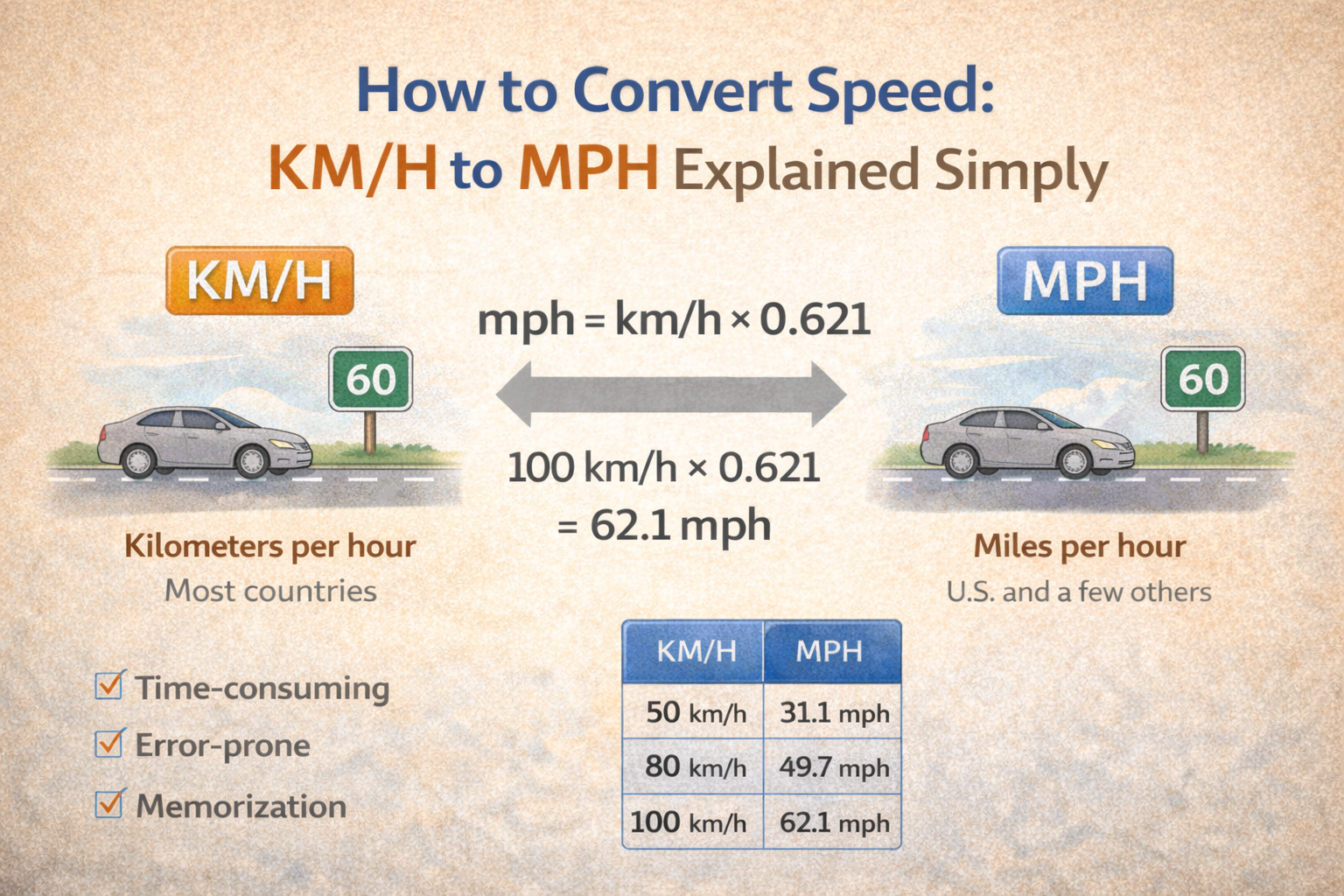
- Miles per hour (mph) ↔ Kilometers per hour (km/h)
Distance
- Miles ↔ Kilometers
Fuel Efficiency
- Miles per gallon (mpg) ↔ Liters per 100 km
Tire Pressure
- PSI ↔ Bar
These conversions are especially important when renting cars, driving abroad, or reading vehicle manuals from other regions.
Unit Conversions and Road Safety
Incorrect unit interpretation can be dangerous for drivers.
Examples include:
- Misreading speed limits
- Over- or under-inflating tires
- Misjudging stopping distances
Understanding basic unit conversions helps drivers stay safe and avoid fines or accidents.
How Travelers Use Unit Conversions Daily
Travelers encounter unfamiliar measurement units almost immediately when visiting another country.
Travelers use unit conversions to:
- Read road signs and maps
- Understand weather forecasts
- Check luggage weight limits
- Plan travel time and distance
Without unit conversions, travel becomes confusing and stressful.

Common Travel-Related Unit Conversions
The most common conversions travelers use include:
Distance
- Kilometers ↔ Miles
Temperature
- Celsius ↔ Fahrenheit
Weight
- Kilograms ↔ Pounds
These conversions help travelers avoid surprises, such as unexpected baggage fees or misunderstandings about weather conditions.
Unit Conversions in Navigation, Maps, and GPS
Modern navigation systems perform unit conversions automatically, but users still need to understand the units displayed.
Unit conversions appear in:
- GPS distance displays
- Estimated arrival times
- Route planning tools
Knowing whether distances are shown in kilometers or miles helps travelers and drivers interpret navigation information correctly.
Problems Caused by Incorrect Unit Conversions
Incorrect unit conversions can cause serious problems across all three groups.
Potential consequences include:
- Engineering failures
- Transportation errors
- Financial losses
- Safety risks
- Delays and inefficiencies
These problems highlight why unit conversions must be handled carefully and accurately.
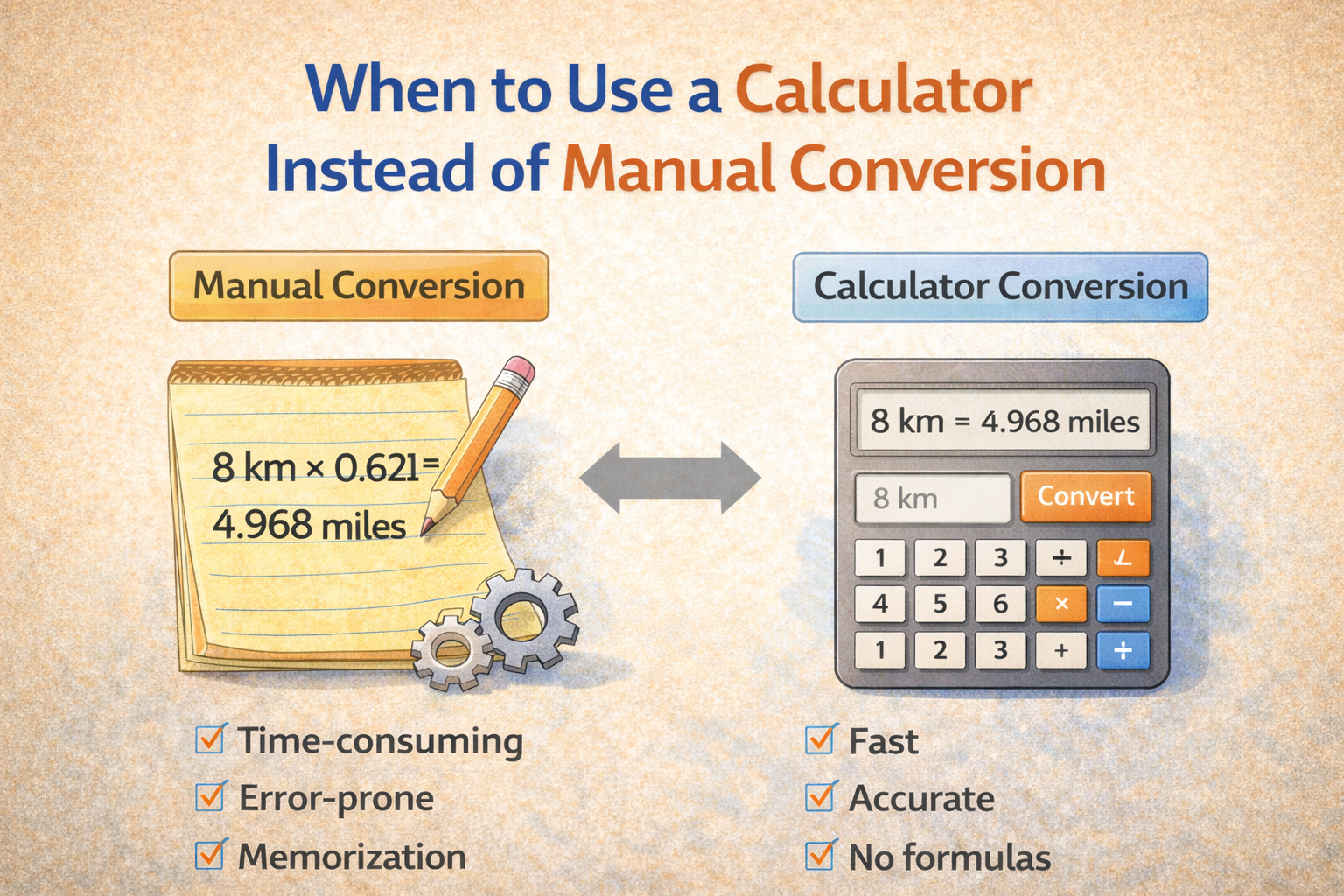
Manual Conversion vs Online Conversion Tools
| Manual Conversion | Online Conversion Tools |
|---|---|
| Requires memorization | No formulas needed |
| Time-consuming | Instant results |
| Higher error risk | High accuracy |
| Slower workflow | Faster decisions |
Understanding conversion concepts is important, but tools significantly reduce mistakes.
Why Online Unit Conversion Calculators Are Essential Today
Online calculators have become essential for engineers, drivers, and travelers because they:
- Save time
- Reduce errors
- Work on mobile devices
- Support many unit types
- Provide consistent results
They allow professionals and everyday users to convert units confidently without relying on memory.
When Accuracy Matters Most in Unit Conversions
Accuracy is especially important in:
- Engineering design and construction
- Vehicle safety and performance
- Medical and scientific contexts
- International logistics and travel
In these situations, even small errors can have serious consequences.
How Education and Training Reinforce Unit Conversion Skills
Engineers, drivers, and travelers all learn unit conversions through education and experience.
- Engineers learn conversions formally in school
- Drivers learn conversions through road use and regulations
- Travelers learn conversions through repeated exposure
Education plays a key role in reducing mistakes and improving confidence.
Will the World Ever Use One Measurement System?
While the metric system is dominant globally, complete standardization is unlikely due to:
- Cultural habits
- Infrastructure costs
- Public resistance to change
Instead, unit conversion skills and tools act as bridges between systems.
Frequently Asked Questions
Why are unit conversions still necessary today?
Because different measurement systems are still used worldwide.
Do professionals rely on conversion calculators?
Yes. Professionals use tools to reduce errors and save time.
Are unit conversions always exact?
Yes, when the correct conversion factor is used.
Why do engineers prefer metric units?
Because they are standardized and easier to calculate.
Conclusion
Understanding how engineers, drivers, and travelers use unit conversions daily reveals how essential accurate measurements are in modern life. Engineers depend on precise conversions to ensure safety and performance, drivers rely on them for safe and efficient travel, and travelers use them to navigate unfamiliar environments with confidence.
While learning basic unit conversion concepts is important, modern tools such as online calculators make conversions faster, safer, and more reliable. In a world that continues to use multiple measurement systems, unit conversions remain a critical skill—one that quietly supports engineering, transportation, and global travel every single day.