How Distance Conversion Works: A Beginner-Friendly Guide is written for anyone who wants to understand how different distance units relate to each other in a simple and practical way. Distance conversion is something we encounter daily—when driving, traveling, exercising, or reading maps—yet many beginners find it confusing.
This guide breaks distance conversion down into clear steps, explains the logic behind it, and shows how it applies in real life, without complex formulas or technical jargon.
What Is Distance Conversion?
Distance conversion is the process of changing a measurement from one unit of distance to another while keeping the actual distance the same.
For example:
- 1 kilometer = 0.621 miles
- 5 kilometers = 3.1 miles
- 100 meters = 328 feet
Only the unit changes, not the real-world length.
Why Distance Conversion Is Important in Everyday Life
Distance conversion matters more than most people realize. You use it when:
- Traveling between countries that use different measurement systems
- Reading road signs or GPS directions
- Tracking running, cycling, or walking distances
- Comparing distances online
- Studying math, science, or geography
Without understanding distance conversion, it’s easy to misjudge how far something actually is.
Understanding Distance Units (Beginner Overview)
Distance units are standardized measurements used to describe how far one point is from another.
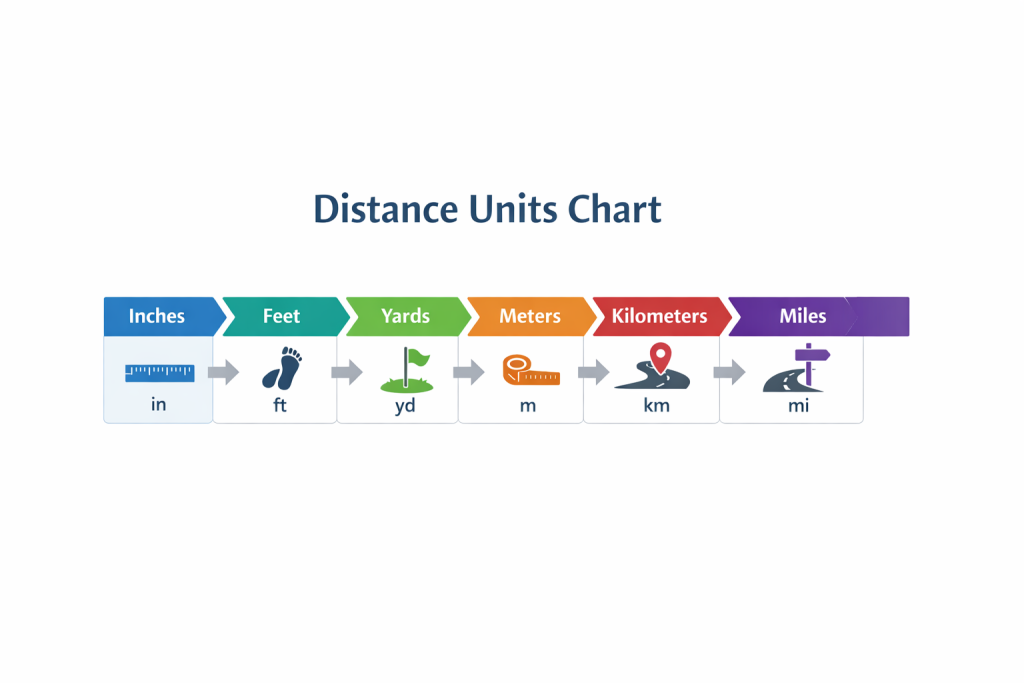
Common distance units include:
- Inches
- Feet
- Yards
- Meters
- Kilometers
- Miles
Smaller units measure short distances, while larger units are used for long distances.
The Two Main Measurement Systems
Most distance conversions happen when switching between two systems.
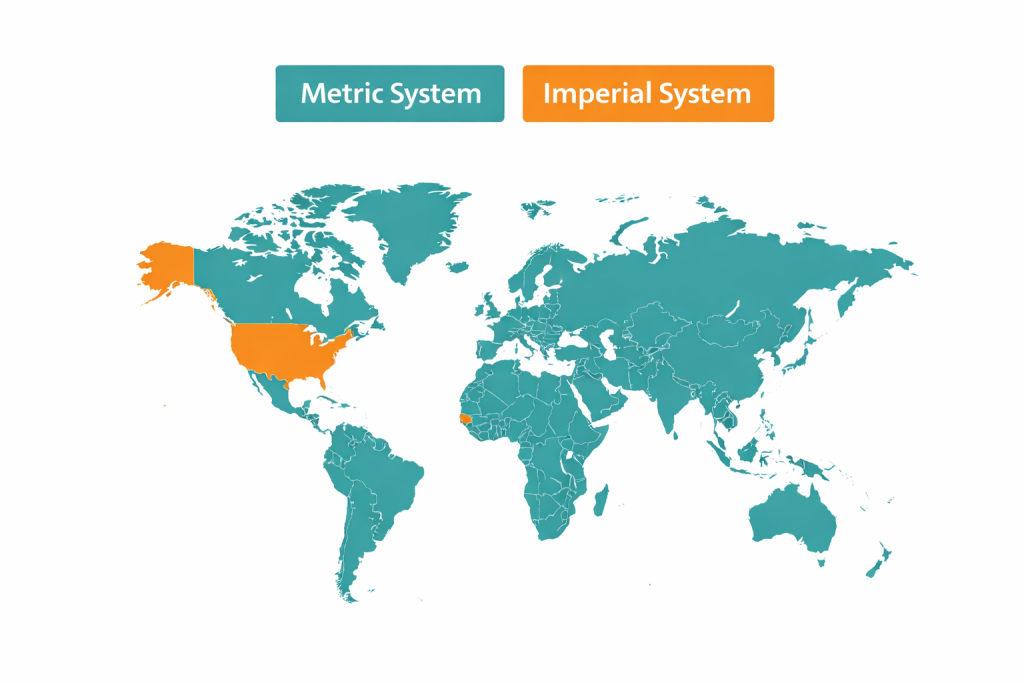
Metric System
- Used by most countries worldwide
- Based on multiples of 10
- Includes meters and kilometers
- Easy to calculate and convert
Imperial System
- Used mainly in the United States and partly in the UK
- Includes inches, feet, yards, and miles
- Commonly used for road distances
Common Distance Units and What They Mean
Here’s a beginner-friendly explanation:
- Inch (in): Very small distances
- Foot (ft): Everyday measurements like height
- Yard (yd): Sports and short field distances
- Meter (m): Base unit of metric distance
- Kilometer (km): Long distances in metric countries
- Mile (mi): Long distances in imperial countries
Understanding these units helps you know what you’re converting.
How Distance Conversion Works (Core Concept)
Distance conversion works because each unit has a fixed mathematical relationship with another unit. These relationships never change.
Examples:
- 1 kilometer = 0.621371 miles
- 1 mile = 1.60934 kilometers
Conversion simply translates the same distance into another unit.
What Are Conversion Factors?
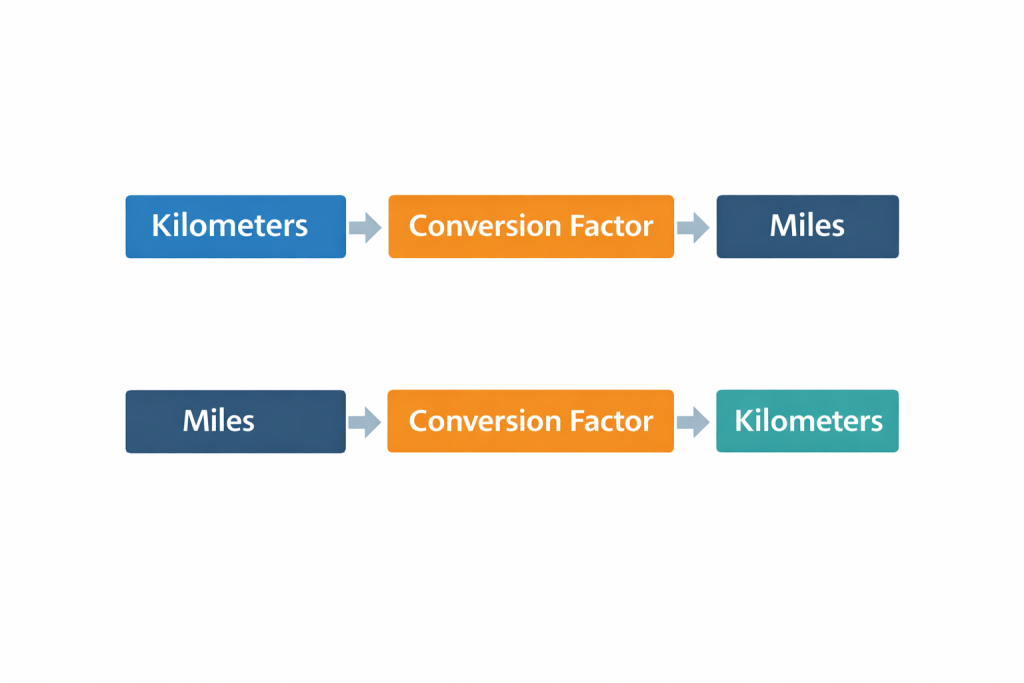
A conversion factor is the number used to convert one unit into another.
Common conversion factors:
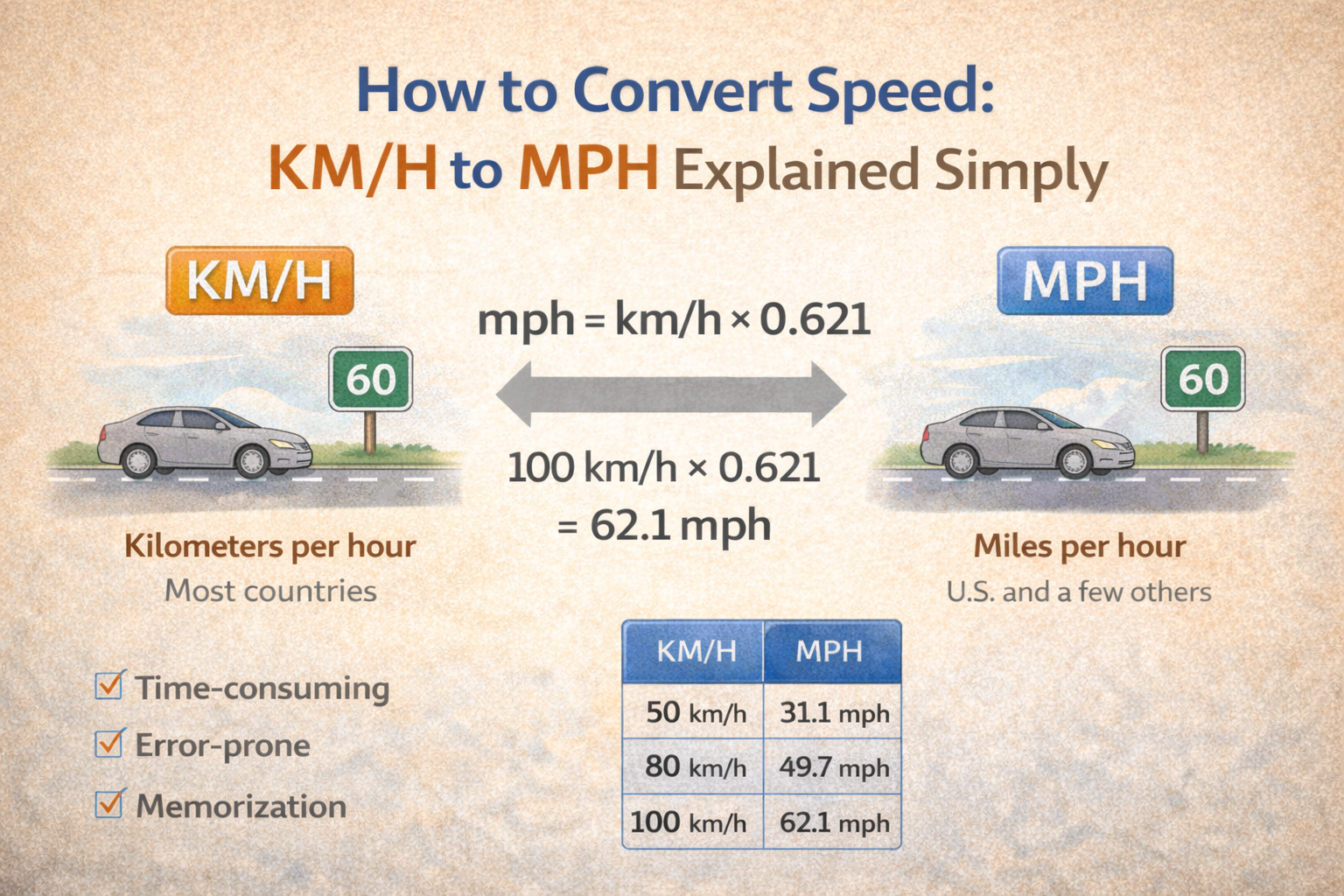
- Kilometers → Miles = × 0.621
- Miles → Kilometers = × 1.609
- Meters → Feet = × 3.281
- Feet → Meters = × 0.3048
These numbers are fixed and always accurate.
Step-by-Step: How to Convert Distance Manually
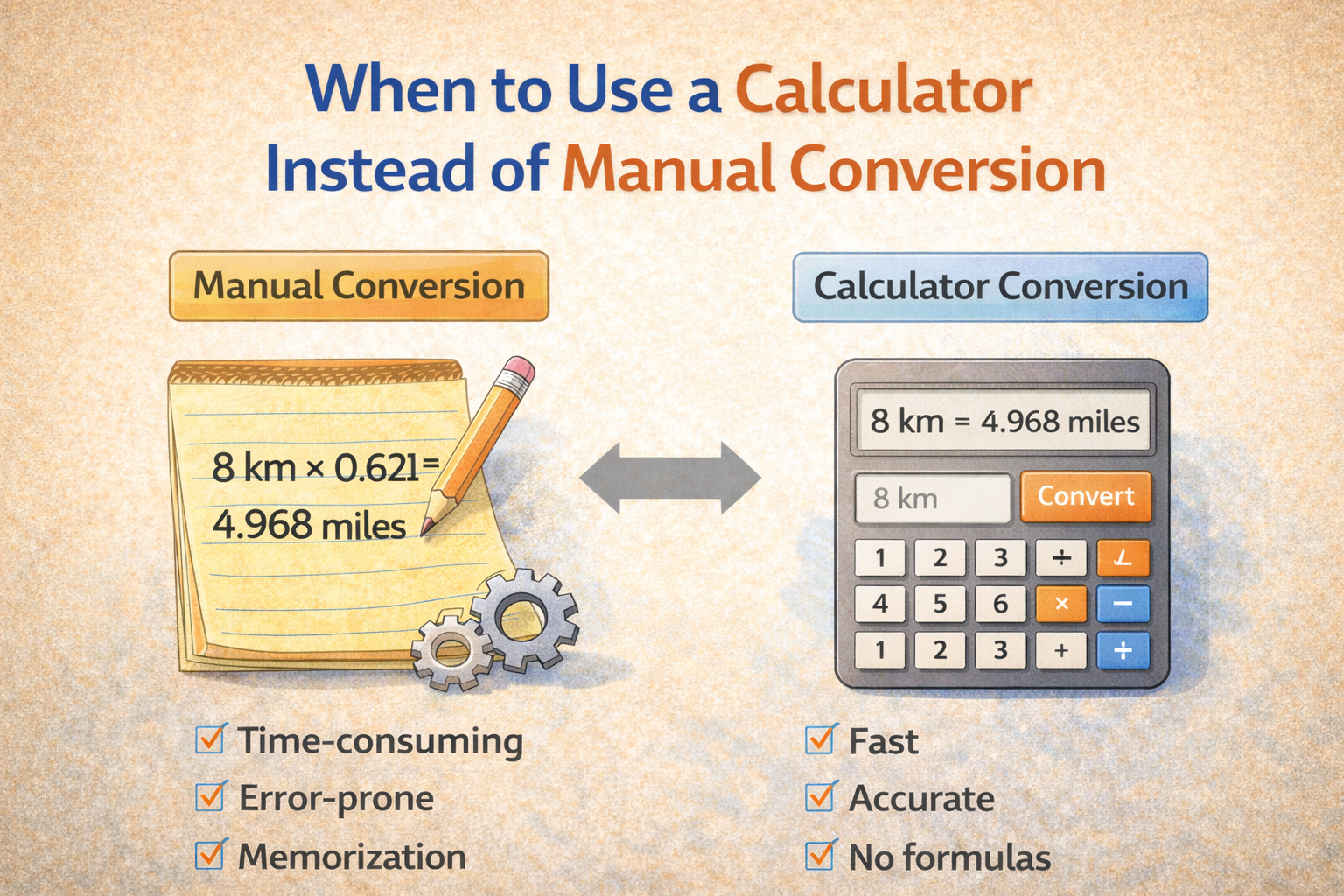
Example: Convert 10 kilometers to miles
- Start with the distance: 10 km
- Use the conversion factor: 0.621
- Multiply:
10 × 0.621 = 6.21 miles
The same steps apply to any distance conversion.
Easy Mental Math Tricks for Beginners
For quick estimates, these shortcuts help:
- Kilometers to miles → divide by 1.6
- Miles to kilometers → multiply by 1.6
- Meters to feet → multiply by 3
These are useful when you don’t need exact numbers.
Real-Life Examples of Distance Conversion
Driving Example
A road sign shows 120 kilometers.
120 × 0.621 ≈ 75 miles.
Fitness Example
A 5K run equals 3.1 miles.
Travel Example
A destination is 500 kilometers away.
500 km ≈ 311 miles.
Common Distance Conversions People Search For
Popular conversions include:
- Kilometers ↔ Miles
- Meters ↔ Feet
- Yards ↔ Meters
- Inches ↔ Centimeters
These are widely used in travel, sports, and education.
Distance Conversion Mistakes Beginners Should Avoid
Common mistakes include:
- Using the wrong conversion factor
- Converting in the wrong direction
- Rounding numbers too early
- Mixing metric and imperial units
Always double-check your units.
Using Online Distance Conversion Calculators
Online calculators make distance conversion:
- Faster
- More accurate
- Easier on mobile devices
They are ideal when converting distances frequently.
When Should You Convert Distance Units?
Convert distance units when:
- Traveling internationally
- Reading maps or GPS directions
- Tracking fitness distances
- Comparing measurements from different countries
Frequently Asked Questions
What is distance conversion?
Changing one distance unit into another without changing the actual distance.
Is distance conversion exact?
Yes, when the correct conversion factor is used.
Do I need to memorize formulas?
No. Understanding the concept is enough.
Conclusion
Understanding How Distance Conversion Works: A Beginner-Friendly Guide gives you a practical skill you can use every day. Once you know distance units and conversion factors, switching between measurements becomes simple and stress-free.
Whether you convert distances manually or use an online calculator, this knowledge helps you plan better, travel confidently, and understand measurements wherever you are.