How to convert kilometers to miles (with real-life examples) is a common question for travelers, drivers, runners, and anyone who deals with distances across different measurement systems. Since some countries use kilometers while others rely on miles, understanding this conversion makes everyday situations—like reading road signs, planning trips, or tracking workouts—much easier. In this guide, you’ll learn a simple formula, an easy shortcut, and practical examples to help you convert kilometers to miles quickly and confidently.
Knowing how to convert kilometers to miles (with real-life examples) is an essential skill in everyday life. Whether you’re driving, traveling, running, or reading distances online, this conversion helps you better understand distances—especially when switching between countries that use different measurement systems.
In this guide, you’ll learn:
- The exact conversion formula
- An easy mental shortcut
- Practical, real-life examples
- Common kilometer-to-mile conversions
Kilometers to Miles Calculator
What Are Kilometers and Miles?
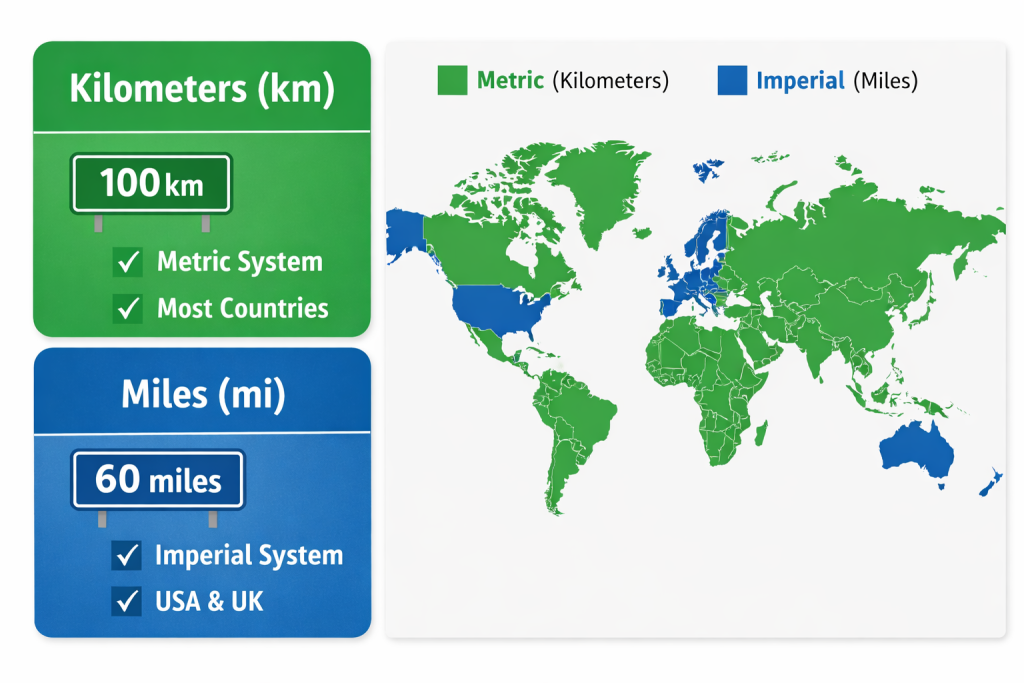
A kilometer (km) and a mile (mi) are both units used to measure distance, but they belong to different systems.
- Kilometers are part of the metric system, used by most countries worldwide.
- Miles are part of the imperial system, mainly used in the United States and the United Kingdom.
Because both systems are still widely used, converting kilometers to miles is a common and practical need.
The Exact Formula to Convert Kilometers to Miles
The standard and accurate formula is:
Miles = Kilometers × 0.621371
This formula works for any distance, no matter how large or small.
Example:
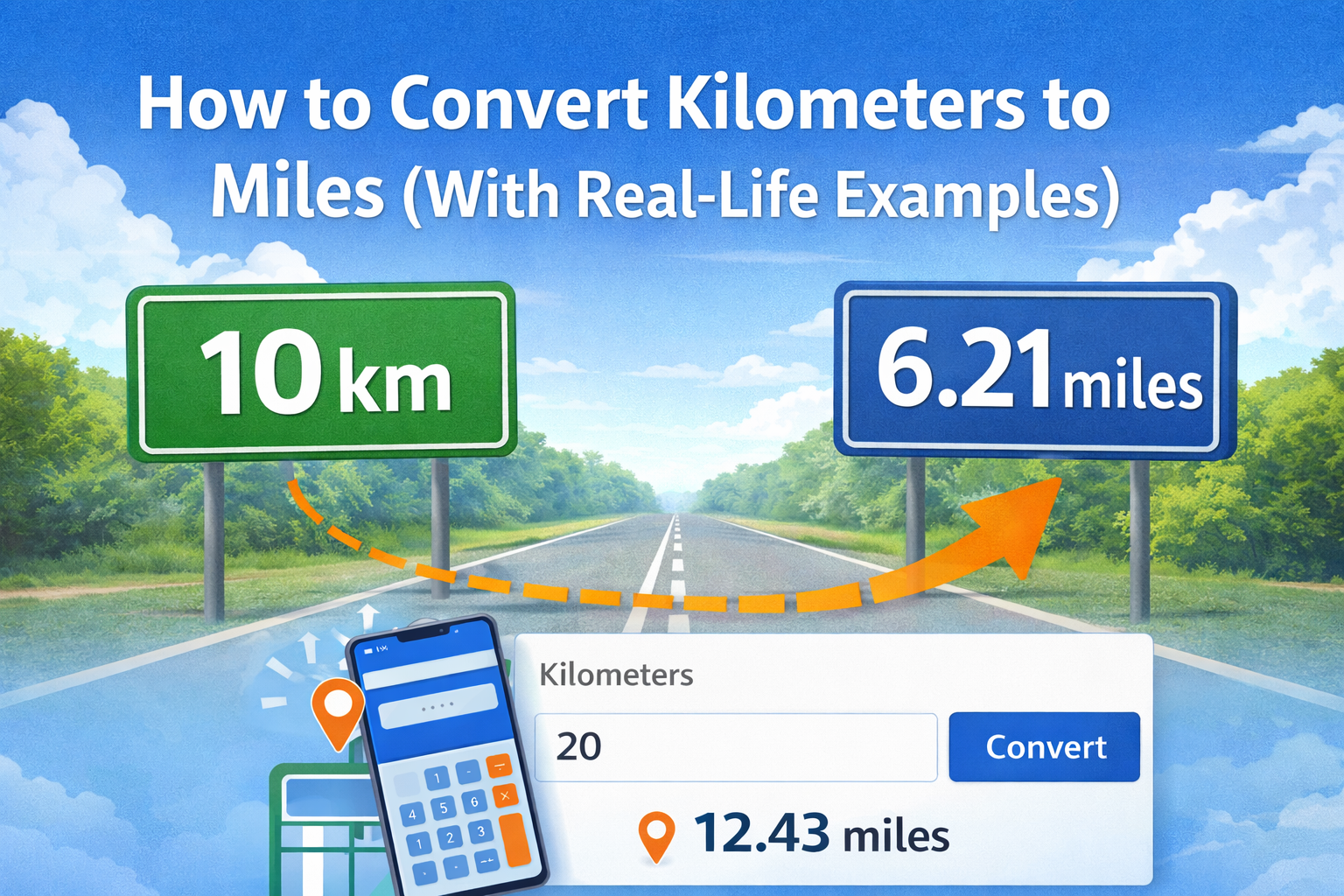
Convert 10 kilometers to miles:
10 × 0.621371 = 6.21371 miles
So, 10 km equals about 6.21 miles.
Step-by-Step: How to Convert Kilometers to Miles Manually
Follow these simple steps:
- Take the distance in kilometers
- Multiply it by 0.621371
- The result is the distance in miles
Example:
Convert 25 km to miles:
25 × 0.621371 = 15.53 miles
This method is best when accuracy matters.
Easy Mental Math Shortcut (Quick Estimate)
For quick calculations, use this shortcut:
Divide kilometers by 1.6
Examples:
- 16 km ÷ 1.6 ≈ 10 miles
- 80 km ÷ 1.6 ≈ 50 miles
This shortcut is ideal for:
- Road trips
- Travel planning
- Fitness tracking
Real-Life Examples of Kilometer to Mile Conversion
Understanding the conversion becomes much easier with real-life scenarios.
Driving Example
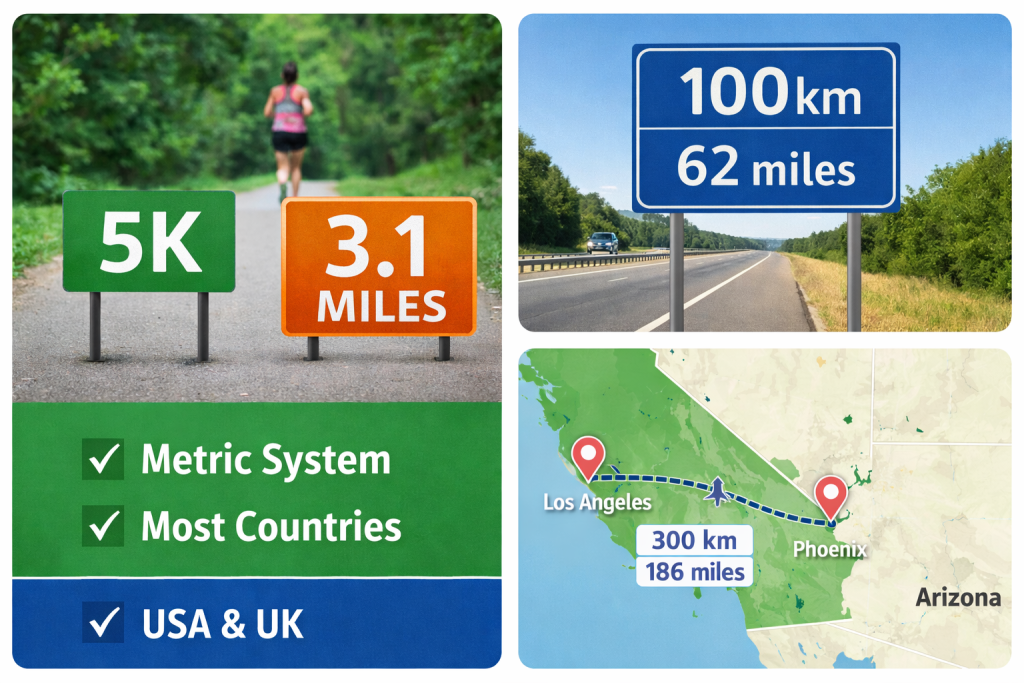
A road sign shows 100 kilometers.
100 × 0.621371 = 62.14 miles
You’ll be driving just over 62 miles.
Running & Fitness Example
A 5K race is 5 kilometers.
5 × 0.621371 = 3.11 miles
That’s why a 5K is commonly called a 3.1-mile run.
Travel Example
A destination is 300 km away.
300 × 0.621371 = 186.41 miles
This helps you estimate travel time more accurately if you’re used to miles.
Common Kilometer to Mile Conversions (Quick Reference)
| Kilometers (km) | Miles (mi) |
|---|---|
| 1 km | 0.62 mi |
| 5 km | 3.11 mi |
| 10 km | 6.21 mi |
| 20 km | 12.43 mi |
| 50 km | 31.07 mi |
| 100 km | 62.14 mi |
These are some of the most searched kilometer-to-mile conversions online.
Kilometers vs Miles: Key Differences
| Feature | Kilometers | Miles |
|---|---|---|
| Measurement System | Metric | Imperial |
| Countries Used | Most of the world | USA, UK |
| Length | Shorter | Longer |
| Common Usage | Science, travel | Roads, driving |
Understanding both units helps you read maps, road signs, and fitness data more confidently.
When Should You Convert Kilometers to Miles?
You should convert kilometers to miles when:
- Driving in countries that use miles
- Reading international race distances
- Understanding speed limits
- Comparing travel distances
- Tracking workouts accurately
Why Use an Online Kilometers to Miles Calculator?
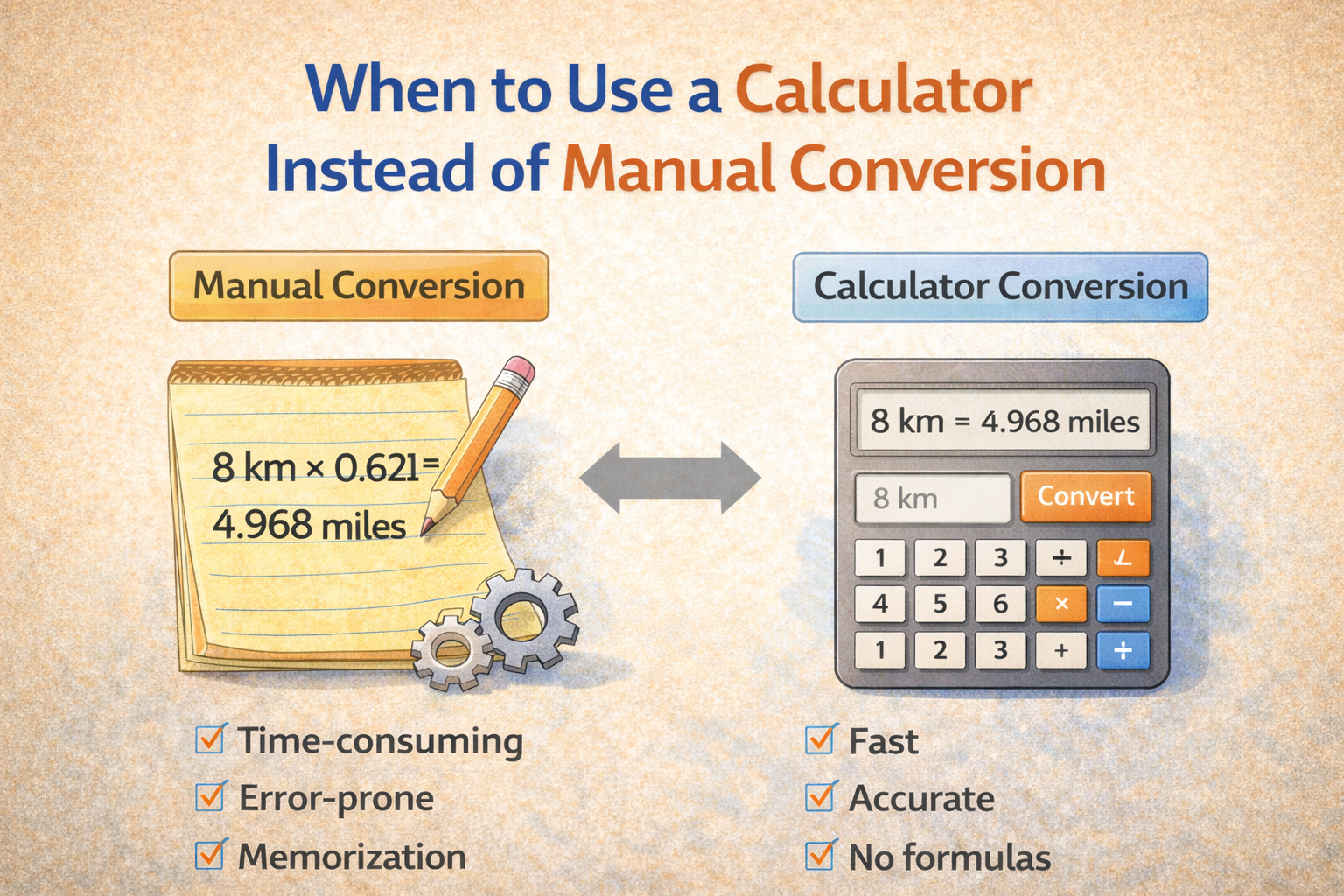
While manual conversion is useful, an online calculator is:
- Faster
- More accurate
- Mobile-friendly
- Ideal for repeated conversions
Frequently Asked Questions (FAQ)
How many miles are in 1 kilometer?
1 kilometer equals 0.621371 miles.
Is a mile longer than a kilometer?
Yes. One mile is longer than one kilometer.
What is the easiest way to convert km to miles?
Multiply kilometers by 0.62 for a quick estimate.
Why does the US use miles instead of kilometers?
The US follows the imperial system, while most countries use the metric system.
Conclusion
Understanding how to convert kilometers to miles (with real-life examples) is a simple but valuable skill that makes everyday situations easier. Whether you’re driving, traveling, exercising, or studying, knowing how to switch between these units helps you better understand distances wherever you are.
By using the formula kilometers × 0.621371, a quick mental shortcut, or an online calculator, you can convert distances accurately and confidently in seconds.
Bookmark this page for future reference, and whenever you need fast and reliable distance conversions, you’ll know exactly how to do it.